API Integration Strategies for Web Applications | The Bridge Technology
Master secure and scalable API integration for web apps and PWAs. Learn tools, patterns, and UAE use cases. Build faster with The Bridge Technology. Contact us.
Developers need a clear playbook for reliable API integration. This guide covers architecture choices, security, performance, tooling, and UAE specific scenarios, with a focus on installable PWAs.
Category: Web Development
API Integration Strategies for Web Applications
Key Takeaways
- Choose the right API style for each domain slice, REST for resources, GraphQL for aggregate queries, gRPC for high performance service to service calls.
- Design for trust from day one with OAuth 2.0, OpenID Connect, scoped tokens, and strong secrets management.
- Prioritize performance with caching, edge delivery, and service worker strategies that power installable PWAs users can add from Google Play and App Store.
- Build resilience with rate limits, circuit breakers, retries with progressive back off, and idempotency keys.
- Automate quality with contract tests, schema checks, and CI CD that gates deploys on measurable reliability.
- Track value using observability and business metrics, not only uptime.
APIs are the connective tissue of modern software in the UAE and worldwide. Commerce, payments, logistics, hospitality, and smart city platforms in Dubai and Abu Dhabi rely on clean API integration to deliver real time experiences. For Progressive Web Apps that install like native applications and appear on Google Play and App Store, a reliable API layer is the difference between instant delight and friction.
At The Bridge Technology, we build fast, secure, and installable web applications that feel like native. Our teams deliver production ready architectures that scale across the GCC and global markets. This guide condenses field tested lessons you can apply tonight.
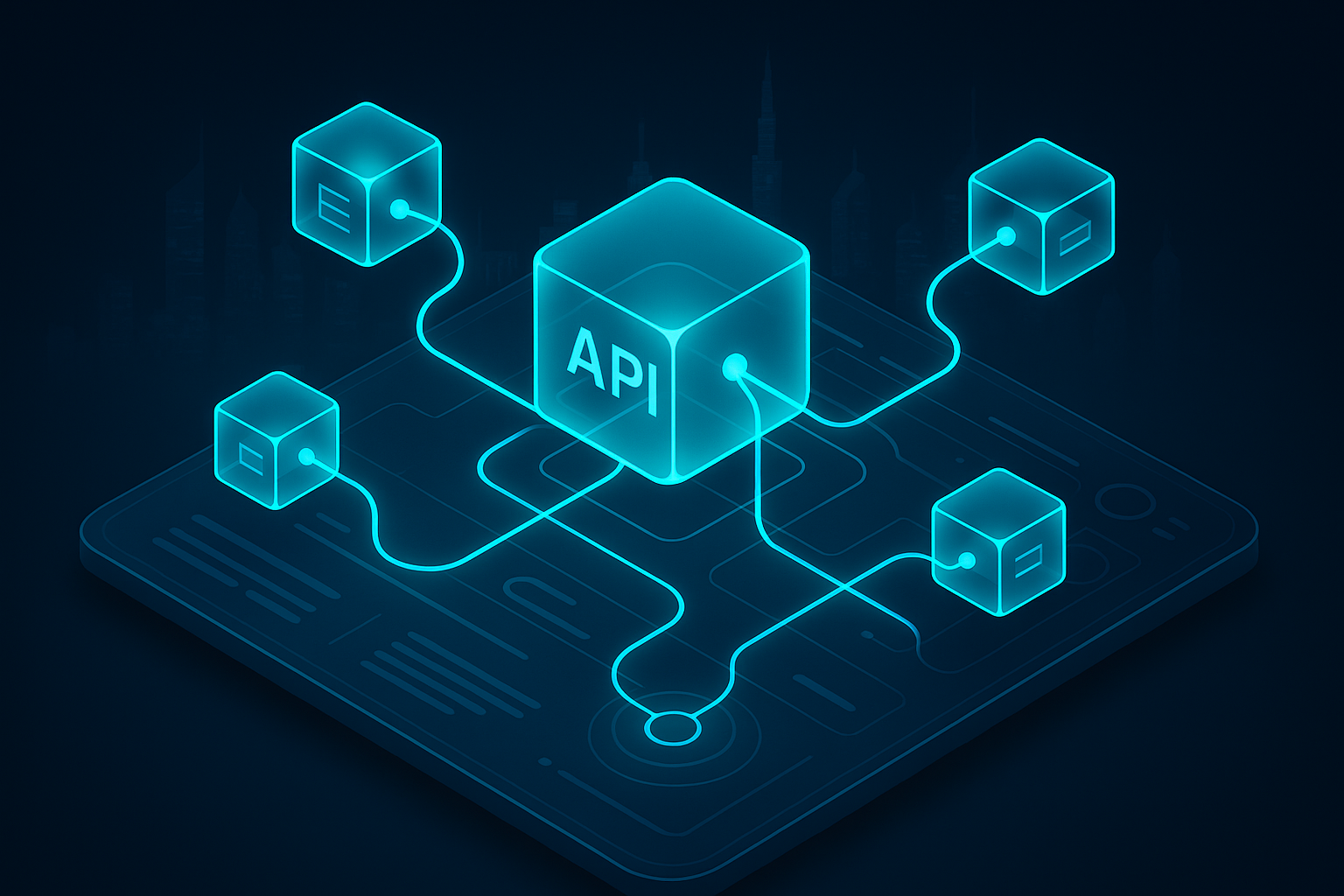
Start with the business journey, then choose the API style
Begin with user journeys, such as browse, pay, track delivery. Map each to domain boundaries, then pick the integration pattern that fits.
REST for resource oriented flows
- Use REST when your entities map cleanly to nouns such as products, orders, shipments.
- Adopt consistent verbs with HTTPS semantics. GET for read, POST for create, PUT for full update, PATCH for partial update, DELETE for removal.
- Return standard status codes, and include problem details for errors to simplify client recovery.
GraphQL for flexible client queries
- Use GraphQL when clients need to fetch many related fields in one round trip, such as product, inventory, price, and promotion data in a single view.
- Set clear field ownership across services to avoid schema sprawl. Gate new fields behind performance budgets.
- Cache at the edge with persisted queries, and secure with depth limits and cost rules.
gRPC for internal high throughput calls
- Use gRPC for service to service traffic where low latency and type safety matter.
- Define protobuf contracts as the source of truth, then generate client libraries for your stack.
- Avoid gRPC for public browser clients. Wrap gRPC with REST or GraphQL at the edge when needed.
Security and trust by design
Security is a product feature, not an afterthought. A single misstep can hurt brand trust, especially in regulated sectors across the UAE.
- Adopt OAuth 2.0 and OpenID Connect for authentication and authorization. Use short lived access tokens and refresh tokens with rotation.
- Scope tokens to minimal permissions. Example, read inventory, not full admin.
- Store secrets in a managed vault. Rotate keys on a schedule and upon suspicion.
- Enforce TLS everywhere. Apply CORS rules narrowly, allow only needed origins and methods.
- Validate all input at the boundary. Use allow lists for webhook sources and sign payloads.
Performance and reliability patterns for web apps and PWAs
Cache what you can, where you can
- Edge caching for public GET endpoints. Use cache control headers that define freshness and allow background revalidation.
- Service worker caching for your PWA shell, icons, and common API reads. Combine pre cache for shell and runtime cache for data.
- Request coalescing to prevent thundering herds when cache expires.
Build resilient clients
- Use retries with progressive back off and jitter for idempotent operations.
- Add circuit breakers and timeouts at key boundaries. Fail fast and degrade gracefully.
- Send idempotency keys for payment and order creation to avoid duplicates.
Think offline first on mobile
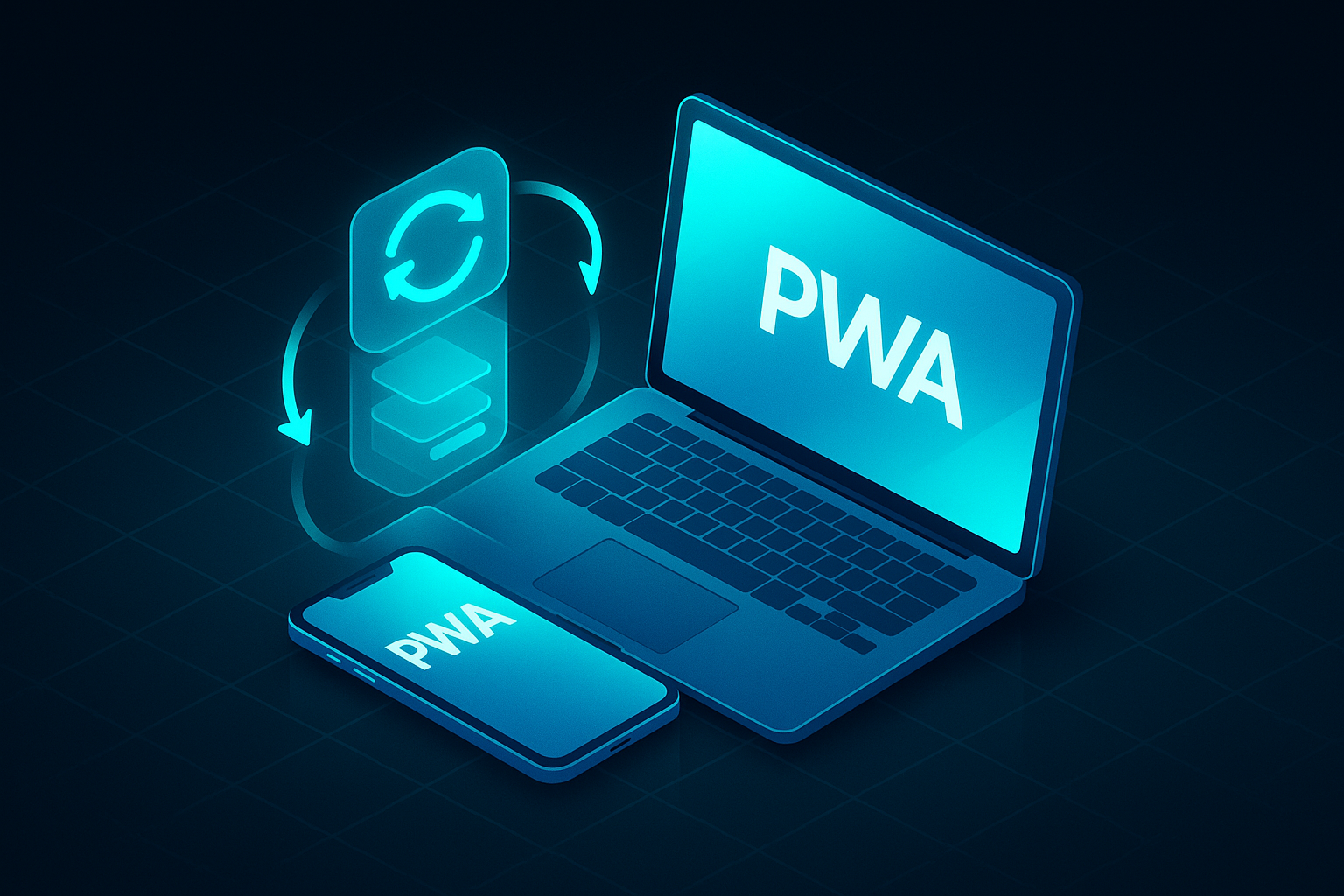
PWAs bridge the gap between web reach and app like feel. In Dubai malls, airports, and desert routes, connectivity can fluctuate. Cache critical data, queue writes offline, and sync when the network stabilizes. Your app installs from stores, lives on the home screen, and behaves predictably.
Tooling that accelerates teams
- API gateways such as Kong, Apigee, AWS API Gateway, or NGINX for routing, auth, rate limits, and analytics. A gateway simplifies edge concerns and frees service teams.
- Schema and contract management with OpenAPI for REST and protobuf for gRPC. Store specs in git, review like code, and publish to a shared catalog.
- Testing with Postman collections, contract tests with Pact, and load tests with k6 or Locust.
- Observability with OpenTelemetry traces, Prometheus metrics, and Grafana dashboards. Define SLIs and SLOs that reflect user experience.
For front end integration and PWA build systems, modern stacks like Next.js or Nuxt deliver fast routes with streaming and partial hydration. If you prefer a custom stack, our Website Development team aligns architectural choices with your product goals, performance budgets, and publishing targets.
Versioning and change management without surprises
- Prefer additive changes for public APIs. Add fields instead of removing them.
- Provide clear versioning via URI paths or headers. Maintain at least two active versions during migration windows.
- Ship a change log with examples. Communicate deprecations early and often through your developer portal.
- Use feature flags to roll out risky changes to small cohorts first.
Real scenarios in the UAE
Retail group in Dubai
A fashion retailer with stores in Dubai Mall wanted unified stock and price across online and in store channels. We integrated POS, ERP, and promotion engines behind a gateway. The PWA fetches a single GraphQL query for product, price, stock, and offer. Service workers cache category pages for instant browsing during evening rush. Result, fewer cart drops and higher conversion on mobile.
Payments and loyalty for a hospitality brand
A hotel group in Abu Dhabi needed secure check in, room controls, and loyalty wallet. We used OAuth 2.0 with PKCE for sign in, added idempotency keys for wallet top ups, and protected webhooks for reconciliation. The PWA installs from app stores and provides offline access to booking details and QR keys in elevators with limited signal.
Logistics aggregator for regional shipping
A logistics platform serving Dubai, Sharjah, and GCC partners unified multiple carrier APIs. We wrapped carrier quirks behind a consistent REST facade, added retries with back off and circuit breakers, and exposed tracking updates through GraphQL subscriptions. Merchants track parcels in real time with fewer support tickets.
Implementation blueprint you can start today
- Map journeys and domains. Break features into resource and query needs.
- Choose API styles per boundary. REST for resources, GraphQL for aggregates, gRPC for internal speed.
- Define contracts first. Write OpenAPI and protobuf, review in pull requests, publish to a portal.
- Secure by default. Set OAuth 2.0 flows, token scopes, and CORS rules. Store secrets in a vault.
- Create a gateway edge. Centralize routing, auth, rate limits, and observability at the front door.
- Build a PWA shell. Pre cache UI, enable offline reads, and queue writes for later sync.
- Add resilience. Timeouts, retries with back off, circuit breakers, and idempotency keys for writes.
- Automate tests. Unit and integration tests, contract checks, and load tests in CI CD.
- Instrument everything. Traces, metrics, logs, and business events tied to SLIs.
- Plan lifecycle. Versioning, deprecation policy, and a migration playbook for clients.
Teams, roles, and cadence
- Platform team owns the gateway, auth, and shared CI CD. It sets guardrails and templates.
- Domain teams own service contracts and uptime. They ship code and schemas together.
- Front end team owns PWA experience, cache policies, and offline sync logic.
- Security champions review flows and secrets management every sprint.
If you want a partner that can deliver from strategy to launch, explore Our Portfolio and see how modular architectures shorten delivery timelines for enterprise and scale up clients.
Tie integration to growth
Integration is not only an engineering task. It powers growth loops. With clean APIs, your PWA can drive faster onboarding, real time pricing, dynamic offers, and personalized content. When you connect APIs to your marketing stack, you can improve attribution and retention.
- Sync catalog and offers into search and social feeds to improve reach. Our Digital Marketing team aligns product data and campaigns for better ROAS.
- Use event streams to trigger customer journeys. With AI Solutions, you can recommend products and detect anomalies in real time.
- Combine web and mobile touchpoints under a single PWA that installs from app stores. Our App Development practice ships installable PWAs that feel truly native.
Why The Bridge Technology
We specialize in web apps that behave like native, complete with app store presence through PWA packaging. We bring reliable integration patterns, production security, and performance tuning to every build. From Dubai startups to Abu Dhabi enterprises, we help teams ship faster with quality.
- Strategy to code ownership through Website Development and App Development.
- Data driven experiences with AI Solutions.
- Ongoing reliability through Support that includes monitoring and performance tuning.
Ready to unify your APIs and deliver a fast PWA that customers love in the UAE and beyond. Contact Us to start a discovery call tonight.
Keywords: API integration, web applications, PWA development, OAuth 2.0, GraphQL, UAE digital transformation, API gateway