Mobile First Design Patterns for Developers | The Bridge Technology
Build faster PWAs with mobile first patterns that convert UAE users. Learn practical layouts, performance tips, and tools. Talk to our experts today.
Mobile first is the fastest route to conversions in the UAE. This guide shows developers how to plan layouts, performance, and offline capability for real business impact with installable PWA experiences.
Category: Web Development
Mobile First Design Patterns for Developers
Key Takeaways
- Start with core tasks on small screens, then progressively enhance for larger viewports.
- Use content hierarchy, fluid type, adaptive grids, and ergonomic touch targets for higher conversion.
- Prioritize performance budgets and ship only what is needed on first interaction.
- Adopt offline first thinking with service workers and background sync for resilient PWAs.
- Measure outcomes with LCP, INP, and CLS, then iterate from real user data.
- The Bridge Technology builds PWAs that feel native and can be installed through app stores, ideal for UAE enterprises.
For B2B teams in Dubai, Sharjah, and Abu Dhabi, mobile first is not a design trend, it is a growth strategy. Evening traffic peaks from commuters and late night shoppers mean your product must be fast, clear, and installable. At The Bridge Technology we specialize in Progressive Web Apps that ship app like experiences, complete with install prompts and store packaging, without the overhead of separate codebases. This guide translates mobile first theory into patterns you can apply this week.
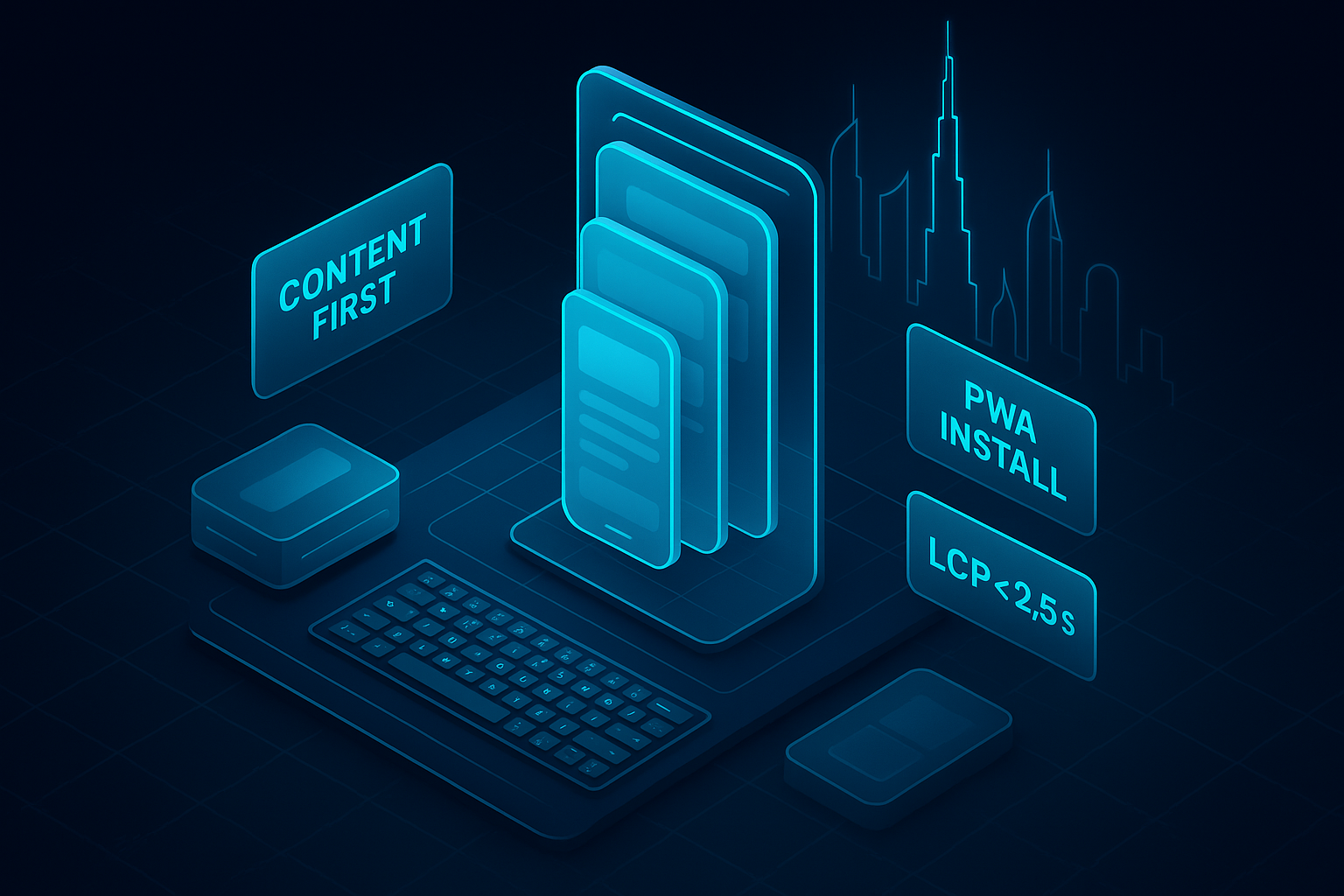
Why Mobile First Converts in the UAE
Mobile usage in the UAE is dominant for search, social, and payments. Decision makers scroll proposals on WhatsApp, approve logistics updates during commutes, and check dashboards between meetings. Mobile first aligns your product with this reality. It reduces initial payloads, focuses on primary tasks, and leverages device capabilities that users already trust.
Consider a Dubai furniture ecommerce brand. Their audience often discovers products on Instagram and lands directly on product pages. A mobile first layout that highlights media, price, and tap to purchase, with instant checkout and biometric pay, delivers fewer steps and higher conversion. Desktop refinements can follow without compromising early mobile wins.
Core Mobile First Patterns That Scale
1. Content First Information Architecture
- Identify tasks that users must complete in under 30 seconds. Examples include checking an order status or requesting a quote.
- Place the primary action in the first screenful with minimal cognitive load. Use clear verbs like Buy now, Book a demo, Track shipment.
- Defer secondary content such as reviews and long explainer text to later sections or collapsible panels.
For an Abu Dhabi service portal that processes permit renewals, the mobile view should surface renewal status, required documents, and a single tap continue action before anything else. Everything competing with that flow belongs further down.
2. Fluid and Accessible Typography
- Adopt a fluid scale that grows smoothly with viewport size, while respecting minimum sizes for readability.
- Use high contrast on dark backgrounds and test with real sunlight conditions common in the region.
- Cap line lengths to comfortable ranges and increase line height for scanning on the move.
The result is a UI that reads well in cars, elevators, and expo halls, which is where many B2B interactions actually occur in Dubai and Abu Dhabi.
3. Adaptive Grids that Start from One Column
- Begin with a single column flow that prioritizes hierarchy and tap paths.
- Scale to two or more columns on larger screens for comparative content, such as plans or feature lists.
- Avoid fixed widths and rely on intrinsic sizing to let content breathe.
In a Sharjah logistics dashboard, mobile can focus on Today and Next, while wider layouts add side panels for fleet maps and alerts. The underlying system remains the same, only the density changes.
4. Ergonomic Touch Targets and Navigation
- Targets should be at least 44 to 48 pixels on the shortest dimension, with ample spacing.
- Keep core navigation reachable by thumb. Bottom navigation or floating primary actions often perform better than top menus.
- Use motion sparingly for orientation. Subtle transitions can clarify context without draining battery.
Glanceable nav with large icons and short labels is a proven combination for users in transit, which matches many UAE usage patterns.
5. Progressive Enhancement
- Ship a functional baseline that renders quickly, even on constrained networks.
- Layer in enhancements like advanced animations or secondary analytics after the first interaction.
- Do not block the path to value on feature detection. Use fallbacks generously.
Baselines win trust. Enhancements win delight. Both are needed for sustainable growth.
6. Performance Budgets and Critical Path Discipline
- Define hard limits for JavaScript, CSS, and image bytes at first render.
- Defer non critical code until after the first user input. Only initialize components when they become visible.
- Serve modern image formats and generate multiple sizes automatically.
Teams that treat budgets as non negotiable tend to win search rank and conversions. When content arrives first and interactivity is snappy, LCP and INP metrics improve, which helps both SEO and ad performance.
7. Offline First with Installable PWA
- Cache the shell and critical routes. Make essential actions available without a connection.
- Queue writes and sync in the background when connectivity returns.
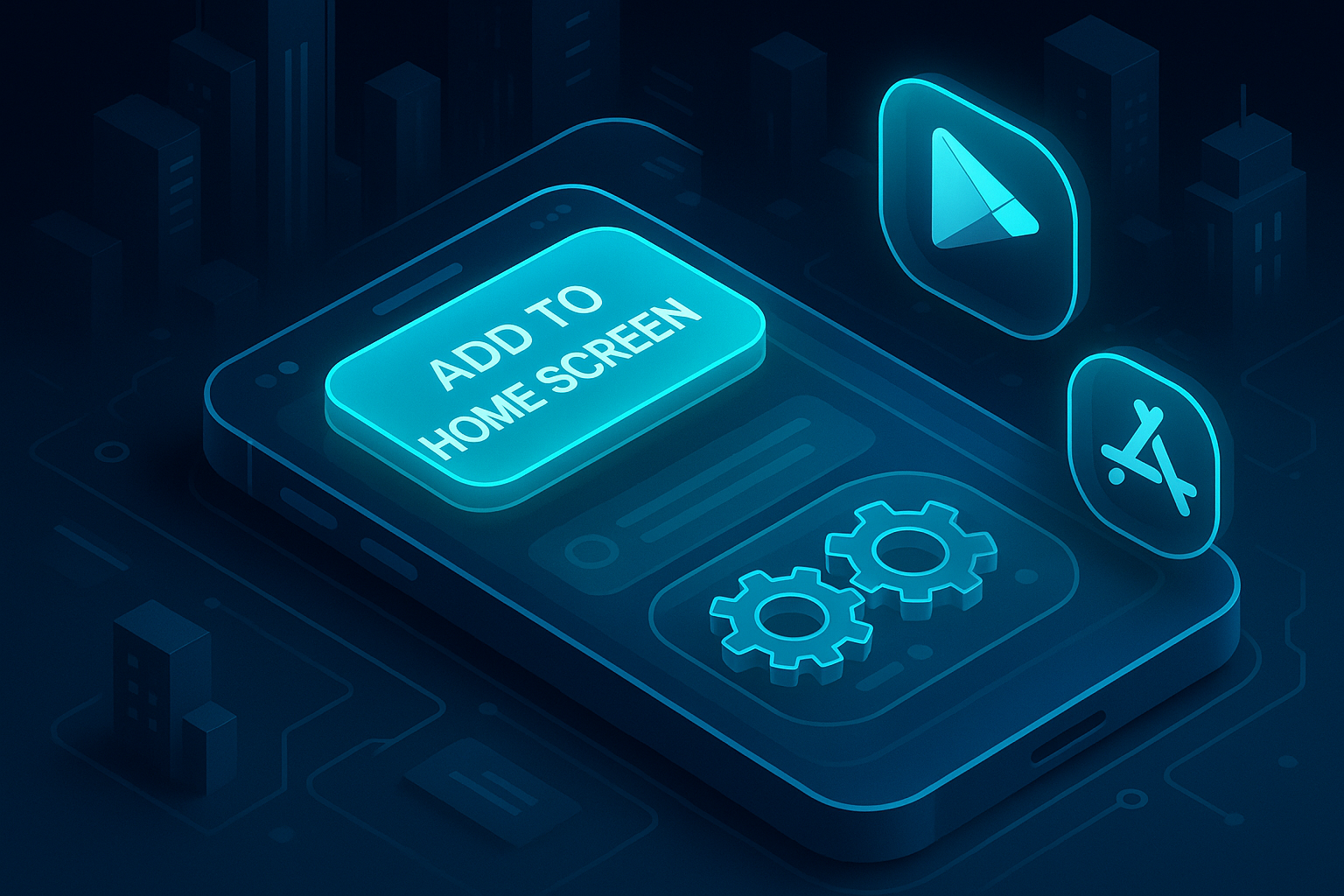
- Expose install prompts and provide store ready packaging for enterprise distribution.
Our specialty is building installable web experiences that behave like native apps. We deliver PWAs that users can add to the home screen and we support packaging for Google Play and Apple distribution options. This approach fits procurement and compliance workflows common in UAE enterprises while keeping a single codebase.
8. Native Like Navigation and Transitions
- Use instant route transitions for perceived performance. Persist header and nav between views.
- Keep URLs and deep links consistent for search and sharing, important for B2B proposals and invoices.
- Support back gestures and keyboard navigation to match user expectations.
Sales teams in Dubai often share links in chats. If the route loads fast, preserves scroll, and supports back navigation fluidly, the flow feels native and reliable.
9. Form Patterns that Respect Mobile Context
- Use appropriate keyboards, like numeric for amounts and tel for phone fields.
- Reduce fields to the absolute minimum and auto format country codes for UAE numbers.
- Validate inline and keep error messages short with clear recovery steps.
For a Dubai event registration, start with name, mobile, and company. Offer one tap autofill and defer lengthy details to a follow up after confirmation. Completion rates improve without sacrificing data quality.
Tooling and Checks for High Performance Teams
Frameworks and Build Strategy
- Choose frameworks that support server side rendering and partial hydration to reduce initial payloads. Next.js, Nuxt, and Astro are practical options.
- Adopt a modular design system with tokens for spacing, type, and color that scale across apps and locales.
- Instrument route based code splitting and prioritize the smallest viable bundle at start.
Observability that Developers Actually Use
- Run Lighthouse on mobile profiles and fold results into pull requests. Set thresholds for LCP, INP, and CLS.
- Use WebPageTest with a Middle East test location to mirror real latency for UAE users.
- Collect real user metrics through GA4, Plausible, or similar, and alert on regressions.
Numbers beat opinions. When the team sees a red LCP spike after a banner experiment, rollbacks become simple decisions.
UAE Case Patterns in Practice
Dubai Boutique Ecommerce
Scenario: a growing boutique furniture brand sought faster product views and fewer cart drop offs. We applied single column mobile layouts, image size automation, and deferred third party widgets until user intent was clear. The site became a PWA with an install prompt after second visit. Result: faster media paint and higher tap to checkout within the first week.
Abu Dhabi Government Portal
Scenario: a permit renewal portal needed to serve users with inconsistent connectivity. We introduced offline caching for forms, background sync for document uploads, and a concise progress tracker optimized for thumb reach. Staff received fewer support tickets because the process was resilient even during metro black spots. Constituents completed renewals without repeating steps.
Sharjah Logistics Operations
Scenario: dispatch managers required real time data with minimal distractions. We reorganized the dashboard mobile first, showing current consignments and exceptions before anything else. Alerts used restrained motion and sound. Push notifications and home screen install shortened access time. The result was faster acknowledgement and fewer missed updates.

How to Pilot Mobile First in One Sprint
- Pick one high value flow such as product detail to checkout or quote request.
- Map the shortest path to value on a single mobile screen, then draft two alternative arrangements.
- Set a performance budget for first interaction. Aim for fast LCP and low input latency on mid tier devices.
- Prototype with your design system and test on physical devices in bright daylight conditions.
- Instrument analytics and define success metrics such as time to action and completion rate.
- Ship behind a flag, measure for one week, then expand the winning approach to adjacent screens.
This pilot fits tightly scoped sprints and builds confidence through measurable outcomes.
Where The Bridge Technology Fits
We craft mobile first experiences that are installable and conversion focused. Our teams deliver enterprise grade Progressive Web Apps that can be distributed through app stores while keeping a single maintainable codebase. If you need a partner to rethink information architecture, performance, and resilience, we are ready.
- See how we deliver premium Website Development for ambitious brands.
- Explore cross platform App Development that feels native and ships quickly.
- Augment experiences with applied AI Solutions such as smart search and personalized recommendations.
- Review outcomes in Our Portfolio to see benchmarks and real world wins.
Checklist for Launch Day
- Primary task visible and actionable within the first screenful.
- Text readable at arm length with balanced line height and contrast.
- Tap targets spacious, with reach optimized for thumbs.
- Images responsive with modern formats and lazy loading.
- Service worker in place with offline shell and background sync for critical flows.
- Lighthouse mobile score monitored with thresholds for LCP, INP, and CLS.
- Install experience tested, including home screen prompts and store packages where applicable.
Mobile first is a mindset that prioritizes clarity, speed, and reliability. In the UAE, where premium expectations meet rapid markets, it is a competitive advantage that compounds. If your team needs guidance on patterns, audits, or greenfield builds, our experts can help you move from plan to production at pace.
Ready to accelerate your roadmap with a mobile first, installable PWA approach that delivers results in the UAE and beyond? Contact Us to start your sprint.
Keywords: mobile first design, PWA patterns, responsive UX, web performance, UAE digital, Lighthouse audits