ROI of PWA vs Native Apps in the UAE | The Bridge Technology
Discover the true ROI of PWA versus native apps for UAE leaders. Cut costs, launch faster, and grow installs. See the data and book a strategy call.
For CEOs in the UAE, the smartest mobile strategy is often a Progressive Web App. Compare ROI, costs, speed to market, and retention against fully native apps.
Category: Mobile Apps
Key Takeaways
- PWA can achieve similar user experience to native with lower total cost of ownership and faster time to market in the UAE.
- Distribution friction is lower with PWA which often lifts acquisition and conversion for ecommerce and services.
- Maintenance for one PWA codebase is typically 30 to 60 percent less than two native codebases over three years.
- Publishing a PWA to Google Play and App Store using modern wrappers preserves web speed while adding store presence.
- Native shines for heavy graphics, deep hardware integrations, or advanced offline compute that exceeds browser limits.
- The Bridge Technology delivers installable PWAs that behave like native apps with push notifications, offline mode, and store listings.
It is 9 a.m. in Dubai and your leadership team wants clarity on where the next mobile dirham should go. Do you fund a Progressive Web App or commit to two full native apps. The answer depends on ROI, not on hype. This article unpacks the numbers, the risks, and the strategic tradeoffs for UAE businesses that want premium experiences without unnecessary burn.
First, what a modern PWA really delivers
A Progressive Web App is a web application enhanced with service workers, caching, and device level capabilities such as push notifications and offline browsing. The best PWAs install to the home screen, work reliably on spotty 5G or Wi Fi, and feel smooth at 60 frames per second. At The Bridge Technology, we specialize in PWAs that can be packaged for Google Play and the Apple App Store so you get store discovery plus the speed and reach of the web.
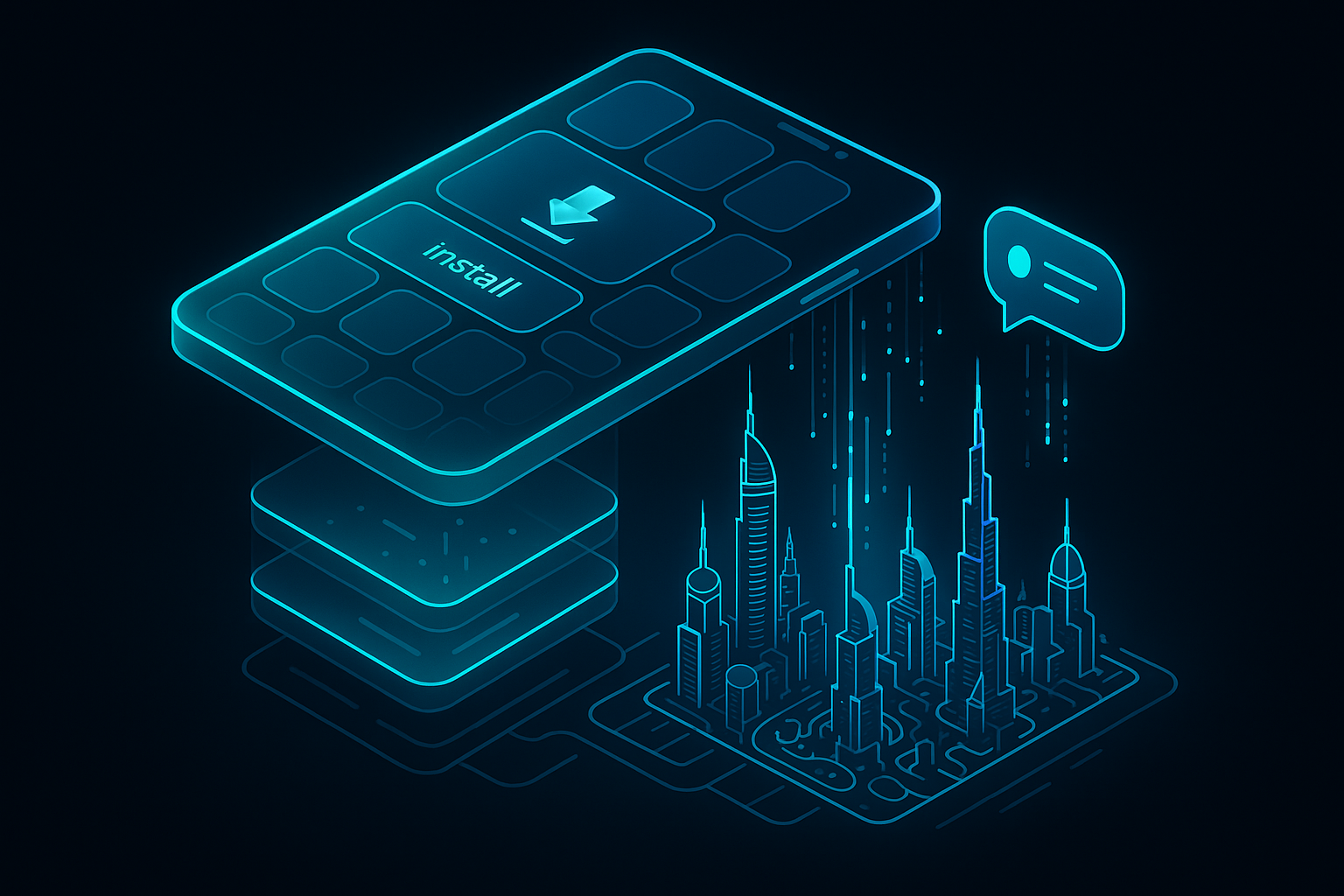
Our approach blends product strategy with engineering. One core codebase serves mobile web and desktop, and when needed, we publish to both major app stores using secure modern wrappers. This reduces duplication while maintaining a native like experience.
Defining ROI for mobile in the UAE
ROI is the net gain divided by total investment. For mobile products in the UAE, gains come from revenue lift, conversion improvements, retention, and operational savings. Investments include design and engineering, cloud and DevOps, app store fees and taxes, marketing, and ongoing maintenance. The right choice is the one that increases lifetime value faster than it increases cost.
Cost to build, launch, and run
Initial build
- PWA: For a polished consumer grade experience with offline support, push notifications, secure payments, and analytics, typical budgets in the UAE range from 180,000 AED to 450,000 AED, depending on scope and integrations.
- Native: Building two codebases for iOS and Android often ranges from 350,000 AED to 1,000,000 AED, especially when parity across platforms is required.
Timeline matters. Many teams in Dubai and Abu Dhabi can ship a PWA MVP in 6 to 10 weeks, then iterate weekly. Two native apps commonly take 12 to 24 weeks for the same scope. Every extra week adds opportunity cost, especially for seasonal demand or event driven offers.
Operations and maintenance
- PWA: One release train, shared QA, shared analytics. Expect 20 to 35 percent of build cost per year for continuous improvement and platform updates.
- Native: Two codebases, two release pipelines, dual QA. Expect 35 to 60 percent of build cost per year to keep pace with OS updates, device variations, and feature parity.
Store policies add hidden costs. Native releases require ongoing compliance checks and review cycles. PWAs update instantly on your schedule, and when store presence is needed, a single wrapper update can be pushed with minimal change to the core.
Acquisition, conversion, and revenue impact
In the UAE, growth relies on fast load, low friction, and omnichannel reach across Arabic and English audiences. A PWA can be discovered via search, paid media, QR codes at retail, and direct links in social feeds. That multiplies your top of funnel without forcing a store visit at the very first touch.
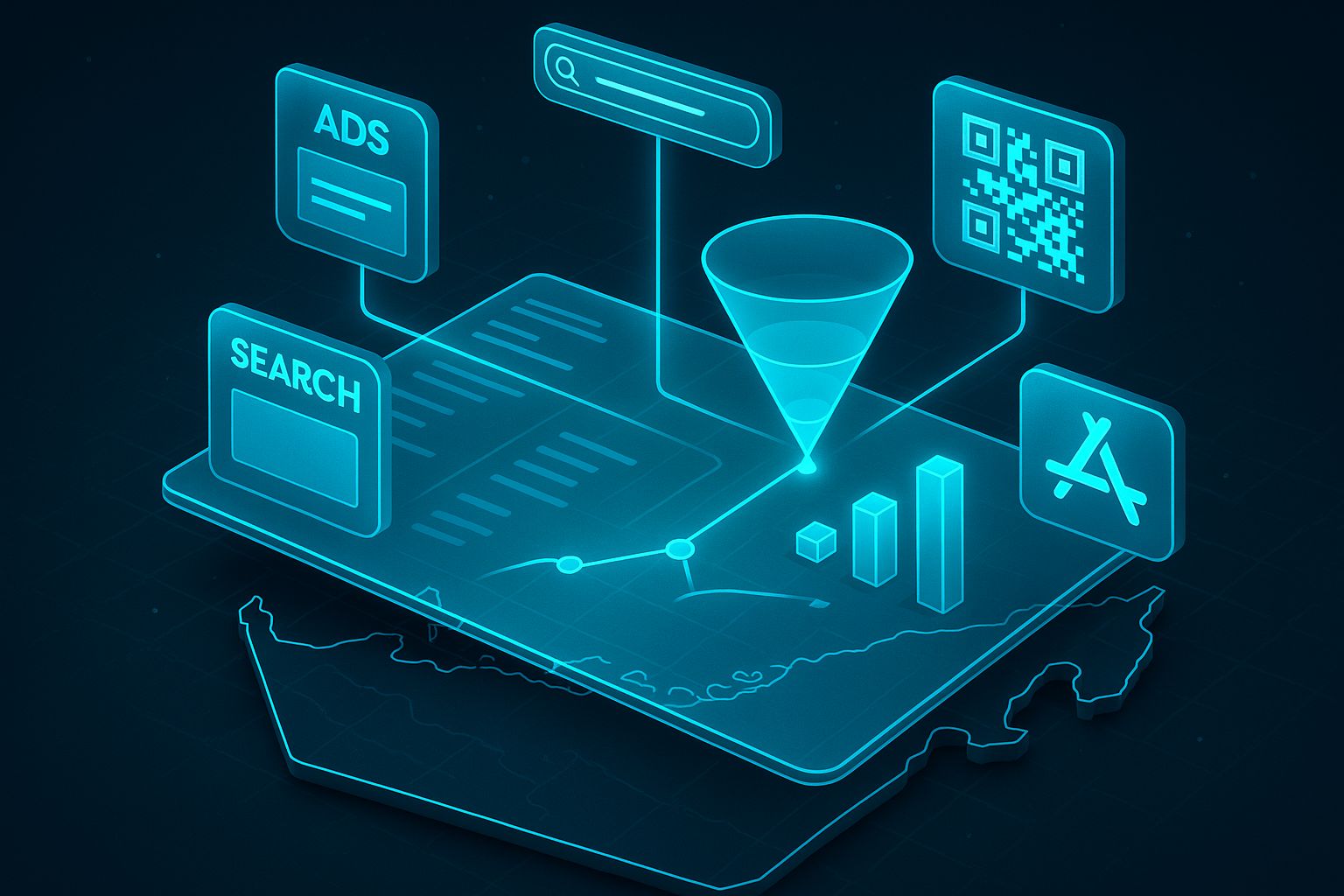
- Install friction: Moving a user from click to store to install to open often loses 40 to 70 percent of prospects. A PWA removes the store step at first contact. Many users add to home screen after initial value is delivered.
- Conversion: Faster page load and offline resilience reduce abandonment. Studies regularly find 20 to 50 percent conversion lifts when moving from slow mobile web to optimized PWA. For a Dubai fashion retailer with 200,000 monthly sessions, that can mean a six figure monthly revenue delta.
- Engagement: Push notifications and background sync bring back lapsed users. PWA push on Android and desktop, and store packaged PWAs on iOS, allow targeted re engagement that feels native.
For brands that rely on app store discovery or in app purchases, we often publish the PWA to stores to capture that traffic while keeping the core web distribution. This hybrid route blends acquisition strengths.
Real world UAE examples and outcomes
Luxury retail in Dubai
A regional luxury retailer piloted a PWA for product discovery, clienteling, and appointment booking across Dubai Mall and Mall of the Emirates footfall. The PWA loaded in under two seconds on 4G and offered offline catalogs for in store browsing. Result: 28 percent higher add to cart, 17 percent more store visits booked from mobile, and a 40 percent reduction in app related support tickets.
Public services in Abu Dhabi
A government service portal introduced a PWA to complement native apps. Residents could complete simple tasks directly from search or a QR code on signage, then install to home screen for faster repeat use. Result: 35 percent more task completion within the first month and lower queue volumes at service centers.
Food and beverage in Sharjah
A quick service chain replaced a slow mobile site with a PWA that cached menus, supported location based offers, and enabled push notifications for lunch windows. Result: 24 percent lift in first orders from mobile web, 18 percent increase in repeat orders driven by notifications, and a 30 percent reduction in cart abandonment.
Where native still makes strategic sense
- High fidelity 3D gaming or intensive graphics where low level GPU access is essential.
- Deep hardware integrations such as advanced Bluetooth profiles, proprietary accessories, or specialized camera pipelines.
- Complex background processing that exceeds current browser service worker limits.
- Use cases where app store ranking is the primary discovery channel and you want full access to store specific features.
Even in these cases, a PWA can serve as the acquisition front door while a focused native app handles the niche heavy workload.
ROI model you can take to the board
- Baseline metrics: Current mobile sessions, conversion rate, average order value, retention, support ticket volume, and CAC.
- PWA uplift assumptions: Faster load can add 15 to 30 percent to conversion. Push can add 5 to 15 percent to repeat transactions. Offline mode can reduce support tickets by 20 to 40 percent.
- Cost inputs: Single codebase build and yearly enhancement for PWA versus dual codebase for native. Include cloud, analytics, security, and store fees where relevant.
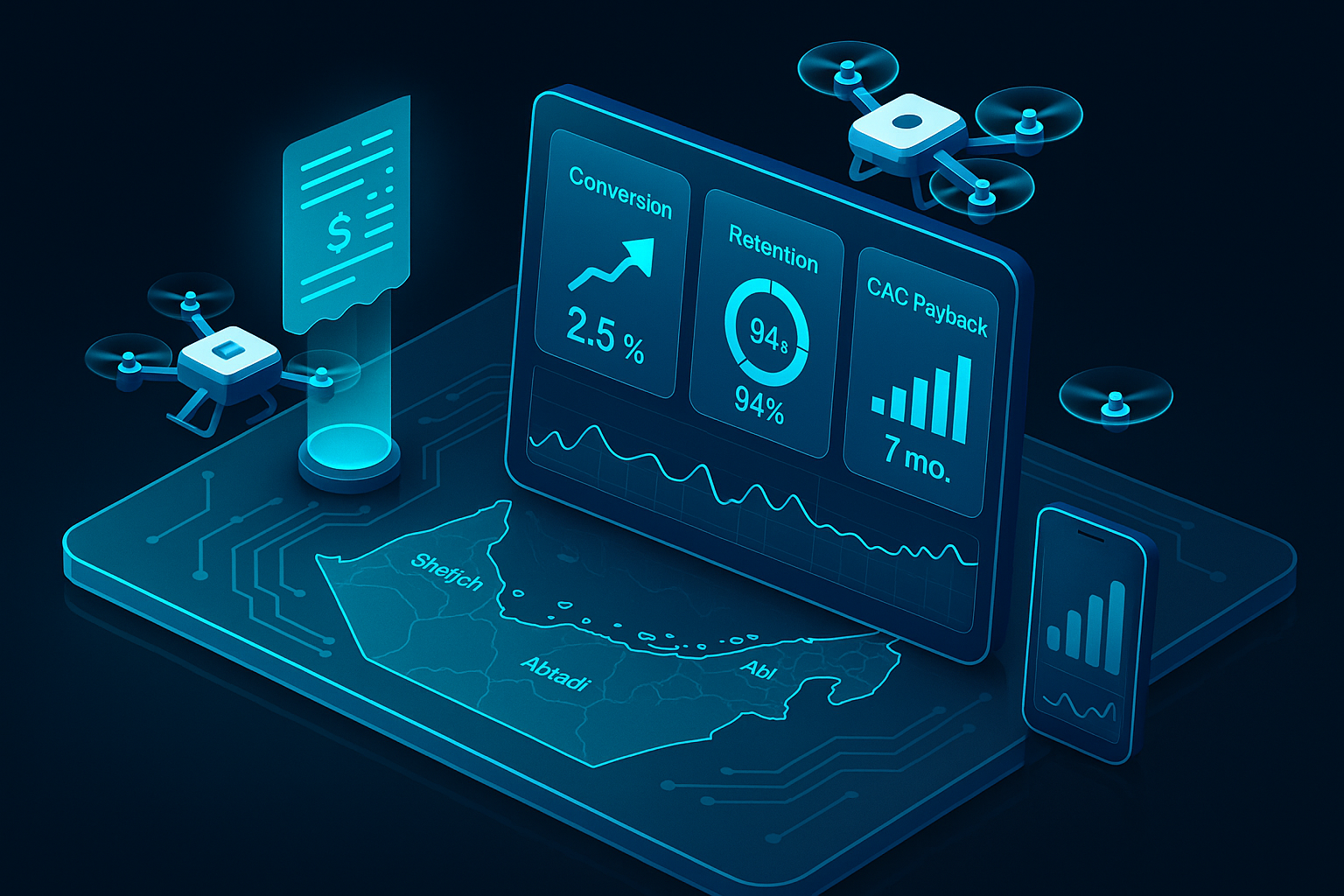
- Payback: Estimate monthly incremental gross profit generated by the PWA and divide build cost by that figure. Many UAE teams see payback inside 6 to 12 months when product market fit is clear.
- Risk buffer: Model three scenarios, conservative, expected, and upside. Commit to fast iteration cycles with weekly releases.
How The Bridge Technology maximizes your ROI
We design and build installable PWAs that feel indistinguishable from native for most business cases. Our team aligns stakeholders on KPIs, then delivers rapid increments that compound value. Explore our core capabilities:
- Website Development for lightning fast PWAs, storefronts, and portals that convert on every device.
- App Development when you need store packaged PWAs or selective native modules for advanced features.
- AI Solutions to personalize journeys, power smart search, and predict churn for better retention.
- Digital Marketing and Advertising to fill the funnel with qualified traffic across search, social, and retail QR activations.
- Social Media for always on engagement, creator partnerships, and brand safe performance.
- Support for monitoring, security patches, and performance optimization.
See what premium execution looks like in Our Portfolio. You will notice a clear focus on speed, UX polish, and measurable outcomes.
Practical launch plan for UAE leaders
- Start with a discovery sprint to clarify user journeys, payment flows, languages, and key events such as Ramadan or peak tourism.
- Ship an MVP PWA that covers the 80 percent use cases, then layer native only features if your data proves the need.
- Publish to Google Play and App Store using a secure wrapper to capture store search while maintaining web speed and reach.
- Instrument analytics for funnel, performance, push opt in, and retention cohorts. Review weekly with an executive scoreboard.
- Run disciplined growth loops using CRM, paid media, and content. Use AI to personalize offers and timing.
The bottom line
For most UAE businesses, a PWA centered strategy delivers the best blend of speed, cost efficiency, and growth. You gain wider reach at lower acquisition friction, you maintain one codebase with faster releases, and you still capture store presence when it helps. Native remains valuable for specific high complexity needs, but it is rarely the starting point when ROI is the guiding metric.
Ready to quantify your own ROI and see a tailored plan. Speak with our team at Contact Us and let The Bridge Technology turn your mobile vision into a high performance reality.
Keywords: PWA ROI, native app costs UAE, progressive web apps Dubai, mobile strategy for CEOs, app install conversion UAE, TCO mobile apps, PWA vs native ROI